English| EUR
Suggested for you
More currencies
Choose a language
Učja Canyon's zipline course operates under European adventure sports standards, with double-redundant harness systems and daily equipment inspections. The question isn't whether ziplining carries risk—it does—but whether that risk is managed to a level most visitors consider acceptable.
Quick answer
Yes, ziplining in Učja Canyon is safe when operational protocols are followed. The course uses EN 15567-certified equipment, double-clip safety systems that keep you attached at all times, and guides trained in alpine rescue. Injuries are rare and typically minor—scraped hands or bruises from landing—rather than catastrophic. The activity carries inherent risk, but the safety framework reduces that risk to a level comparable to other supervised adventure sports.
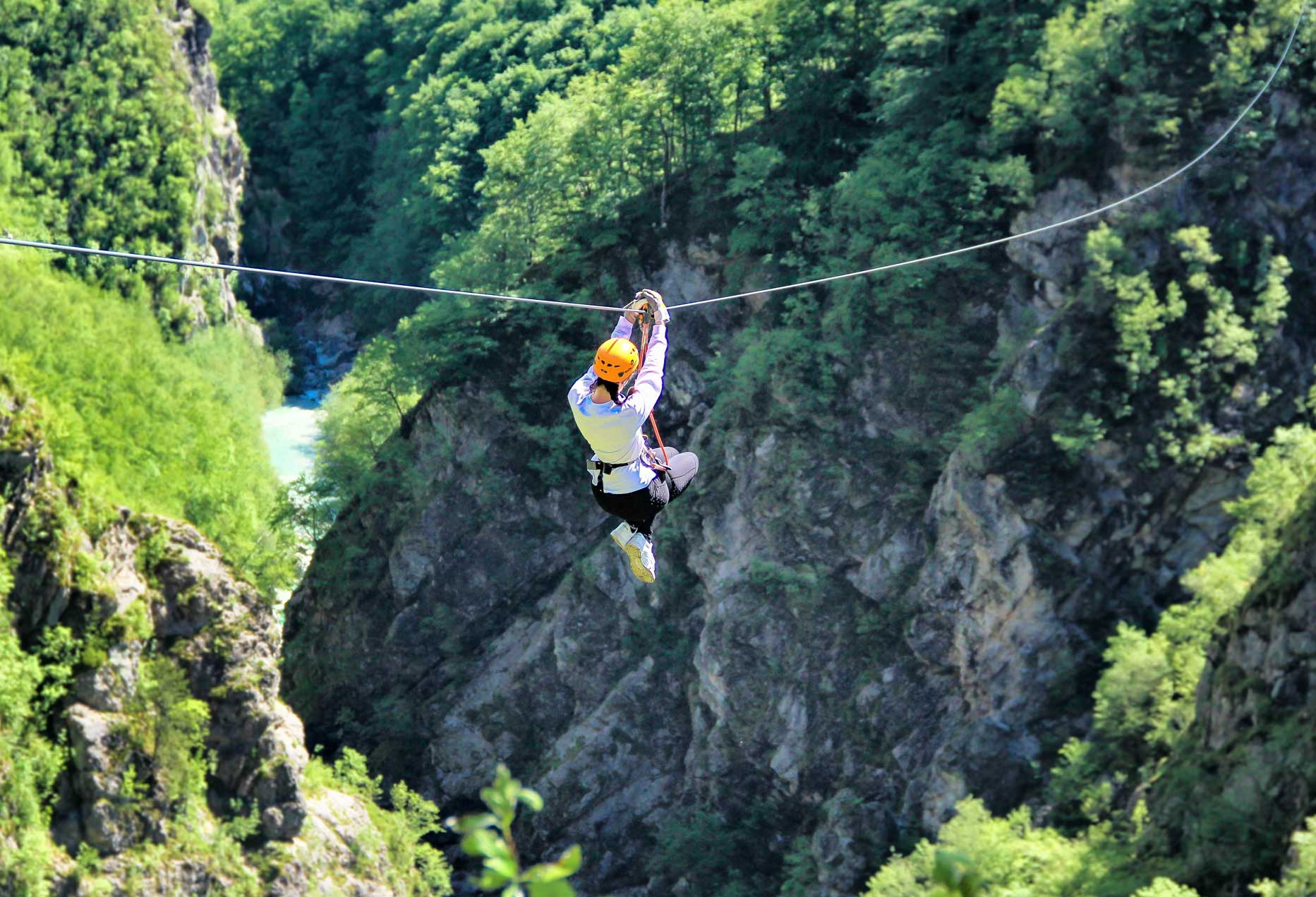
Učja Canyon's zipline sits 60 meters above the Učja River at its highest point, suspended between limestone walls that have been carved by glacial melt for millennia. The vertical exposure is real, and the speed—up to 60 kilometers per hour on the longest span—is enough to make first-timers grip the harness straps. Zipline safety in alpine environments hinges on three systems working in concert: the cable itself, the harness and pulley assembly, and the human protocol that governs both. The cables are inspected daily for wear and tensioned to manufacturer specifications. Harnesses use a double-lanyard system—one clip is always locked to the cable before the other is released, eliminating free-fall risk during transitions. Guides carry rescue kits and are trained to retrieve participants who stop mid-span, a scenario that happens occasionally when a lighter rider loses momentum on an upward-sloping section. The majority of zipline incidents globally stem from user error rather than equipment failure: reaching for the cable during flight, landing with locked knees, or failing to follow braking instructions. Učja Canyon's briefing addresses each of these explicitly, and guides monitor body position throughout the descent. Participants must weigh between 40 and 120 kilograms—outside that range, the physics of the pulley system become unpredictable. Weather plays a role. Operations pause during lightning, high wind, or rain heavy enough to compromise visibility. The canyon's microclimate can shift quickly, and what begins as a clear morning may turn stormy by afternoon. The 10:00–17:00 departure window reflects this reality, concentrating runs during the most stable part of the day. Zipline safety in Slovenia is not a question of whether accidents ever happen—they do, across all adventure sports—but whether the risk profile fits your own threshold. The activity is not零-risk. It is managed-risk, calibrated for participants in reasonable health who can follow instructions under stress. The majority of visitors complete the course without incident, and those who return cite the safety briefing as thorough rather than perfunctory.
“The double-lanyard system ensures one clip is always locked to the cable before the other is released, eliminating free-fall risk during transitions.”
Height-based activities often generate misconceptions due to a lack of familiarity with technical safety standards. Understanding the redundancy systems and guide oversight reveals the structured nature of the Učja Canyon zipline experience.
MythZiplining relies only on a single cable for support.
FactZiplining operations use redundant cable systems and high-strength hardware that far exceed the required load capacity.
MythYou have to manage your own speed or braking.
FactProfessional guides oversee all departure and landing procedures, and the equipment includes automated braking systems designed for controlled deceleration.
MythGuides are just there to help you load the equipment.
FactGuides are professionally trained experts who manage all safety protocols, monitor equipment integrity, and direct the entire descent sequence to ensure participant security.
A few practical steps will help you arrive ready and ensure a safe, comfortable experience on the zipline.
The cost of ziplining in Učja Canyon is determined by the seasonal demand. Booking directly through official channels ensures you receive verified safety information and comply with all regulatory requirements.
Verdict: A typical adult pays 75 EUR, though the final price varies by season.
The Učja Canyon zipline operates daily throughout the week. Visitors should plan their arrival within the established operational window to ensure completion of the course during daylight hours.
The Učja Canyon zipline facility is located at Ledina 2, 5230 Bovec, Slovenia. Visitors should plan their route to the Bovec center where the main office serves as the designated meeting point for all activities.
Drive via road 206 toward Bovec center
Regional bus lines to Bovec station
Walk to Ledina 2, 5230 Bovec
Scheduled departures typically run between 10:00 and 17:00. Arriving within this best arrival window ensures sufficient time for organized transport to the launch site.
Everything you need to know about is ziplining safe
The activity is conducted with professional guides and high-quality gear, ensuring that for the vast majority of participants, is ziplining safe in this natural environment. Operators maintain strict protocols to manage risks during the descent through the canyon.
Participants are equipped with a harness, helmet, and pulley system specifically tested for high-altitude tension. Because rigorous gear checks are mandatory, most visitors feel confident that is ziplining safe for their group.
You do not need previous training to enjoy this experience, as certified instructors provide a comprehensive safety briefing before you start. Many newcomers often ask is ziplining safe before realizing how intuitive the braking and attachment systems are.
Weather conditions such as high winds or storms can impact operations, so the team monitors forecasts daily. Checking the status of your reservation directly through the official site ensures your visit aligns with safe operational standards.
Participants must generally be in good health, and specific limitations regarding age or weight are set by the operator for equipment integrity. It is best to review the current physical requirements on the booking page prior to arrival.
The entrance fee starts at 75 EUR per person. Prices can fluctuate depending on the season, so check the official site for the most accurate information regarding your planned date.
Zipline Učja Bovec Guide
Read more GuideZiplining Risks and Considerations
Read more Tickets & toursZipline Učja Canyon Options
Read more Tickets & toursUčja Schlucht Zipline
Read more Tickets & toursTokkelbaan Bovec Učja Canyon
Read more Tickets & toursBovec to Učja Canyon Zipline
Read more